


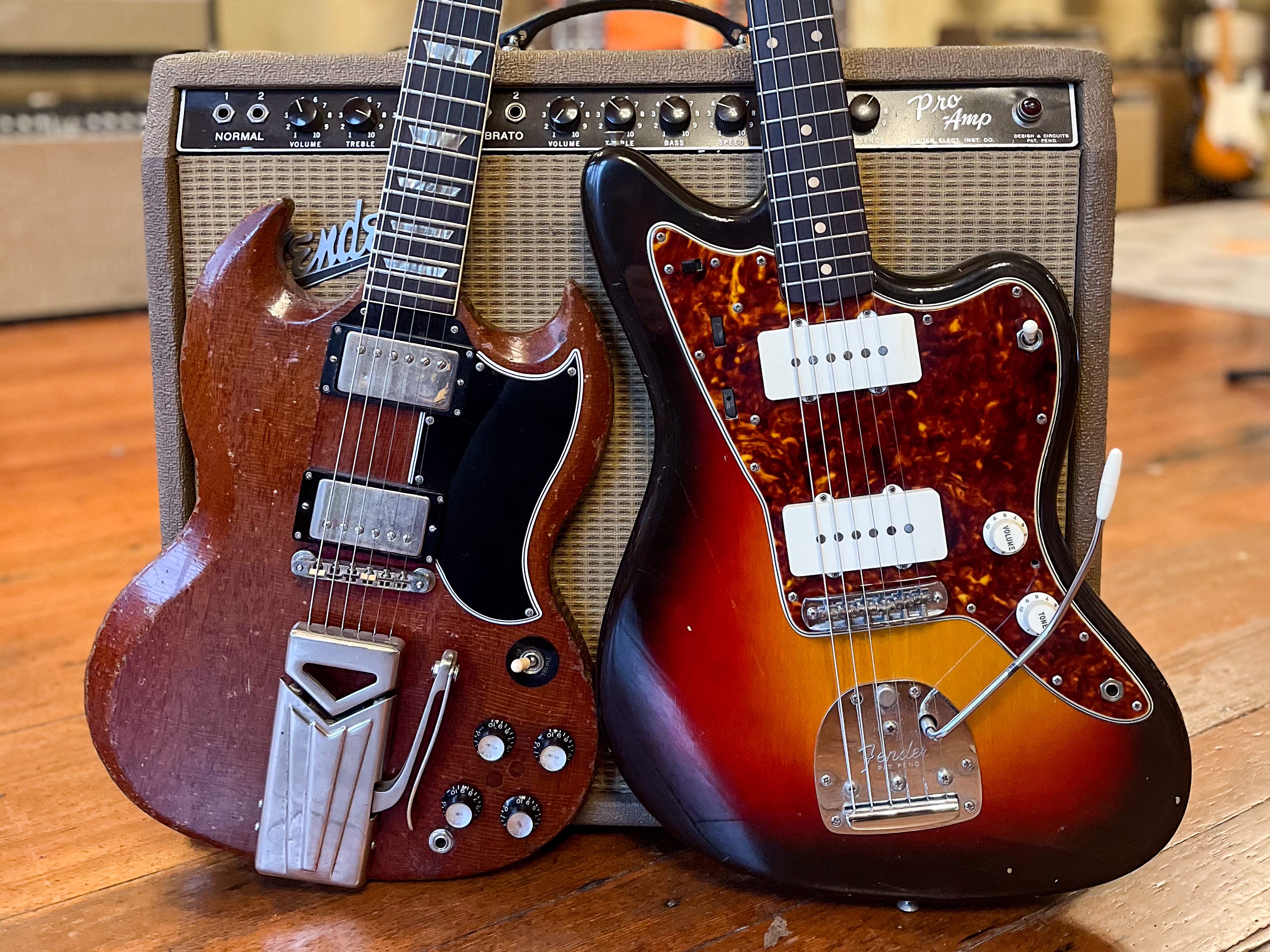
A so-called “employee guitar” is a guitar that a worker on the factory floor of a guitar company made for themselves. They’re exceedingly rare, but the story typically goes something like: the employee in question received approval from management to piece together their own personal instrument, working while on break or after hours, crafting their guitar just the way they wanted.
Employee guitars are spoken about in cautious terms across the vintage guitar world, in conversations full of I thinks and probablys. For the majority of these instruments, it’s extremely difficult to trace them directly back to the alleged original builder/owner or substantiate claims of originality, at least the way that we typically establish provenance for other vintage instruments. You won’t find a George Gruhn-approved chart for the number of employee guitars that left a factory in any given year.
These are instruments that were, by their very nature, not subject to the same documentation process as production gear. They were frequently compiled from a disparate mishmash of parts, pulled from discard piles and factory second bins, with components sometimes produced years apart. They’re a line cook’s special shift meal, made just to their liking.
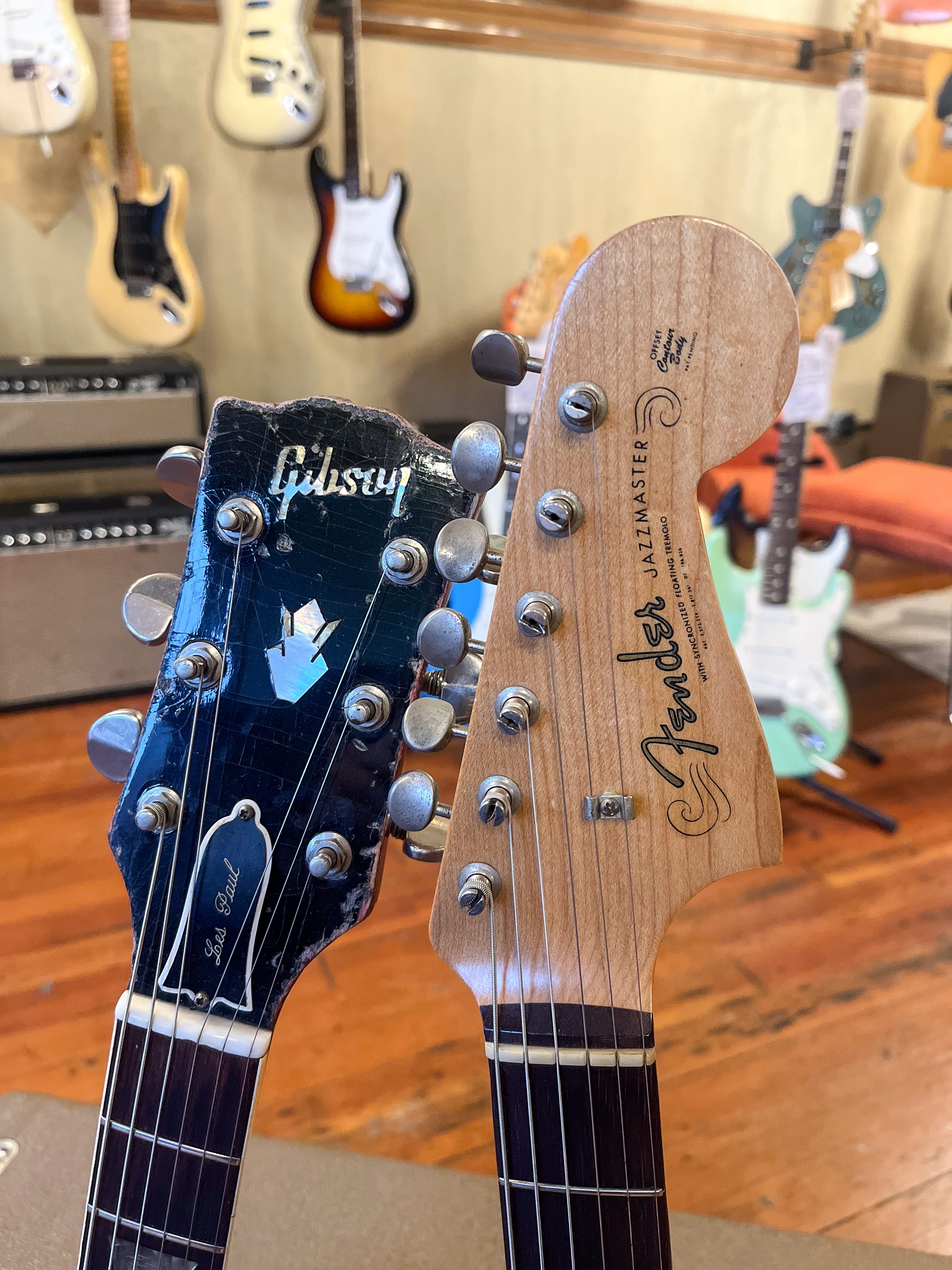
It’s rare enough to have one employee guitar in the shop, even rarer to have two, but it’s virtually unheard of to have two employee guitars, both made within a year of each other, from the two biggest brands in the world of electric guitars. That’s currently the case here at the Guitar Bar, and we couldn’t resist the chance to shine a spotlight on these two fascinating instruments.
1958/1961 Jazzmaster
In the Californian corner, we’ve got this Jazzmaster (you know we love an Offset here at the Guitar Bar):
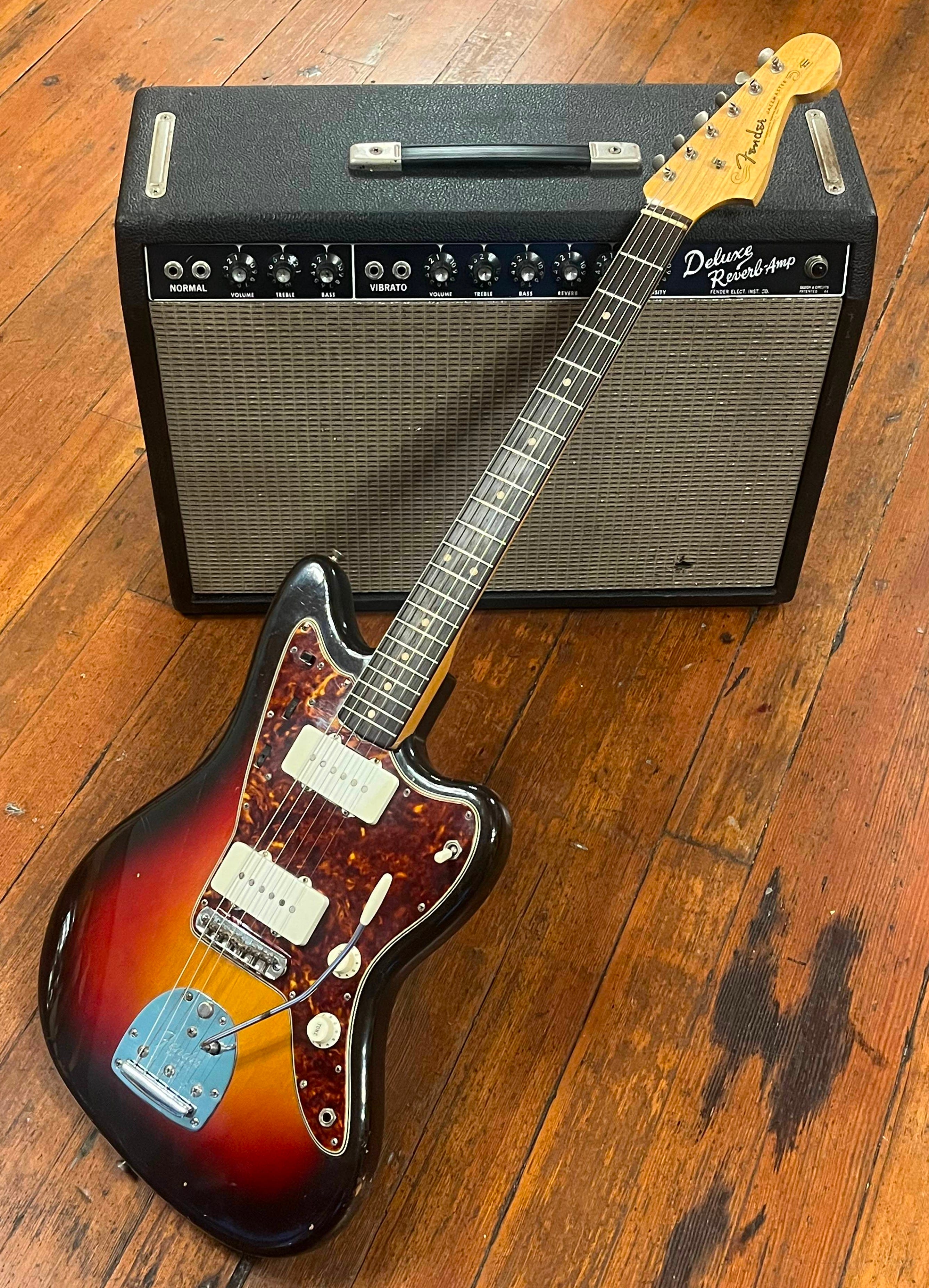
It’s a true amalgamation, pairing a late ‘58 “Gold Guard” body with a neck, electronics, and hardware from 1961. Presumably, it was put together in ‘61, very likely by an employee named Bill, who penciled his name on the body between the pickup routes.
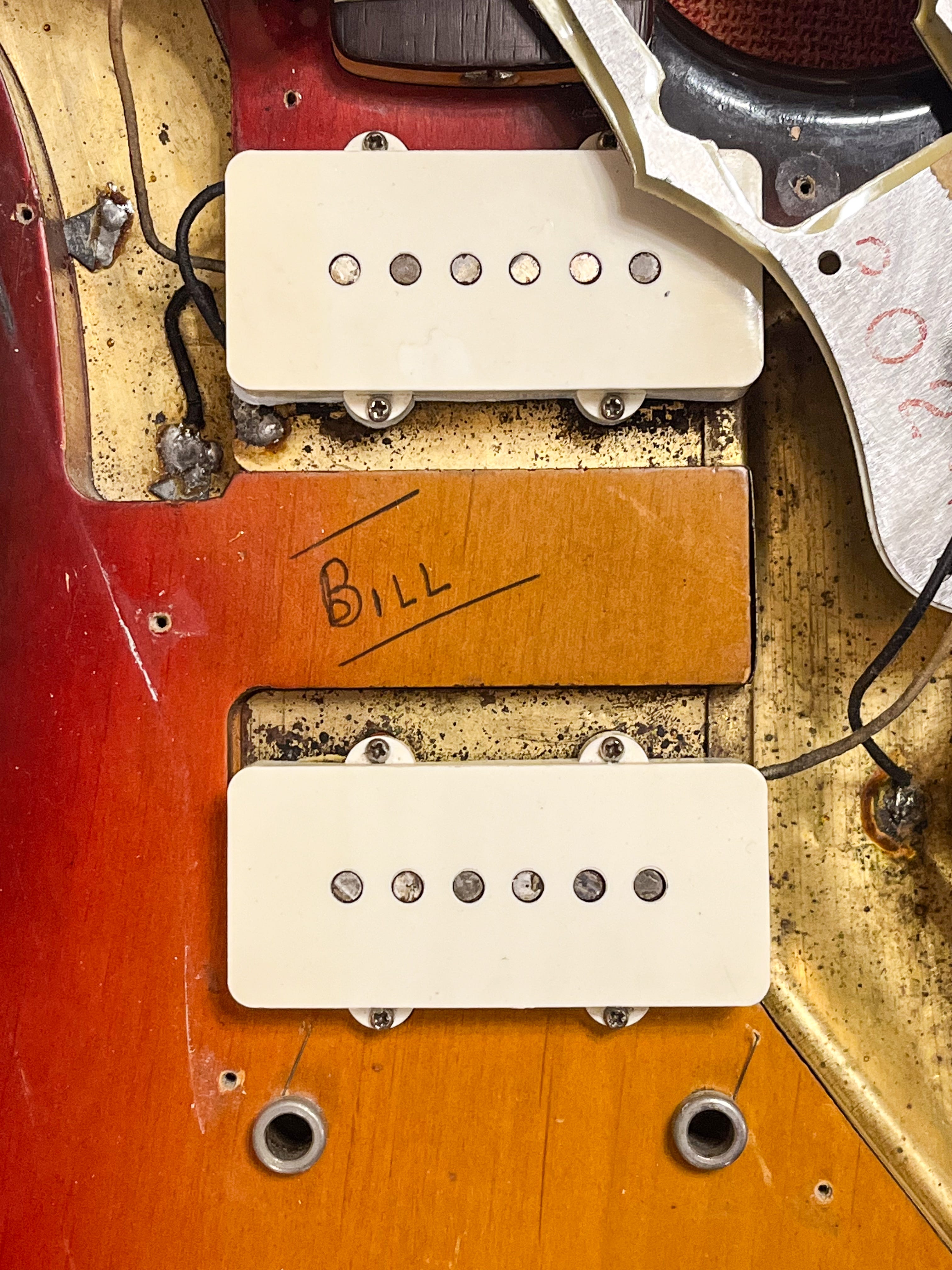
Other Employee status indicators include the “EB” brand in the neck pocket (applied with a soldering iron very similarly to the “RR” Fender used to denote Restore and Refinish factory work in the same era): we’ve taken “EB” to translate as “Employee Build,” which is certainly an assumption, but one that becomes less of a stretch when considered in tandem with the body’s Factory 2nd designation.


Factory 2nd components typically have either a natural defect or one acquired via the manufacturing process, whether that be an imperfection in the wood, a faulty bit of routing, etc. They’re still perfectly usable, and typically still end up in production (albeit with visual identifiers to their status, for discount purposes). In the case of this particular body, this status was likely applied to the body due to its finish: it has two sets of nail holes - the mounting points where nails would suspend bodies at Fender during the finish process - with one set that has clearly been filled while spraying an additional layer of lacquer atop the burst on the body edge.
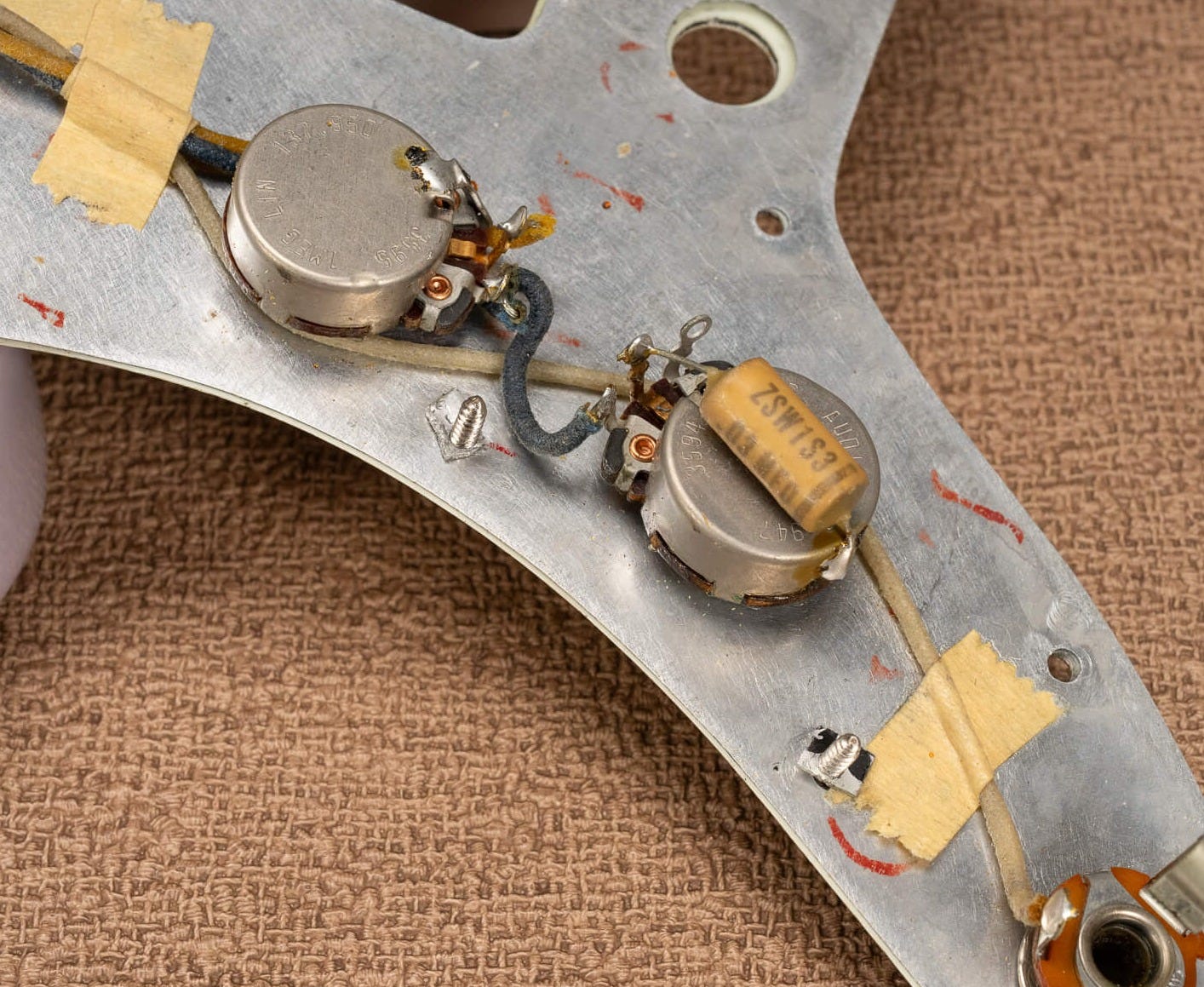
But that’s not all: this guitar also has some awesome MacGyvering going on: because the gold guards were 9-hole, and the nitrate tortoise guards in use when electronics were produced were 13-hole, this pickguard has more mounting screws in the area of the Lead Circuit control route than the body does mounting points. The rather ingenious solution to this problem was to mount the extraneous screws into little “grommets” made from bobbin fiberboard and rubber.
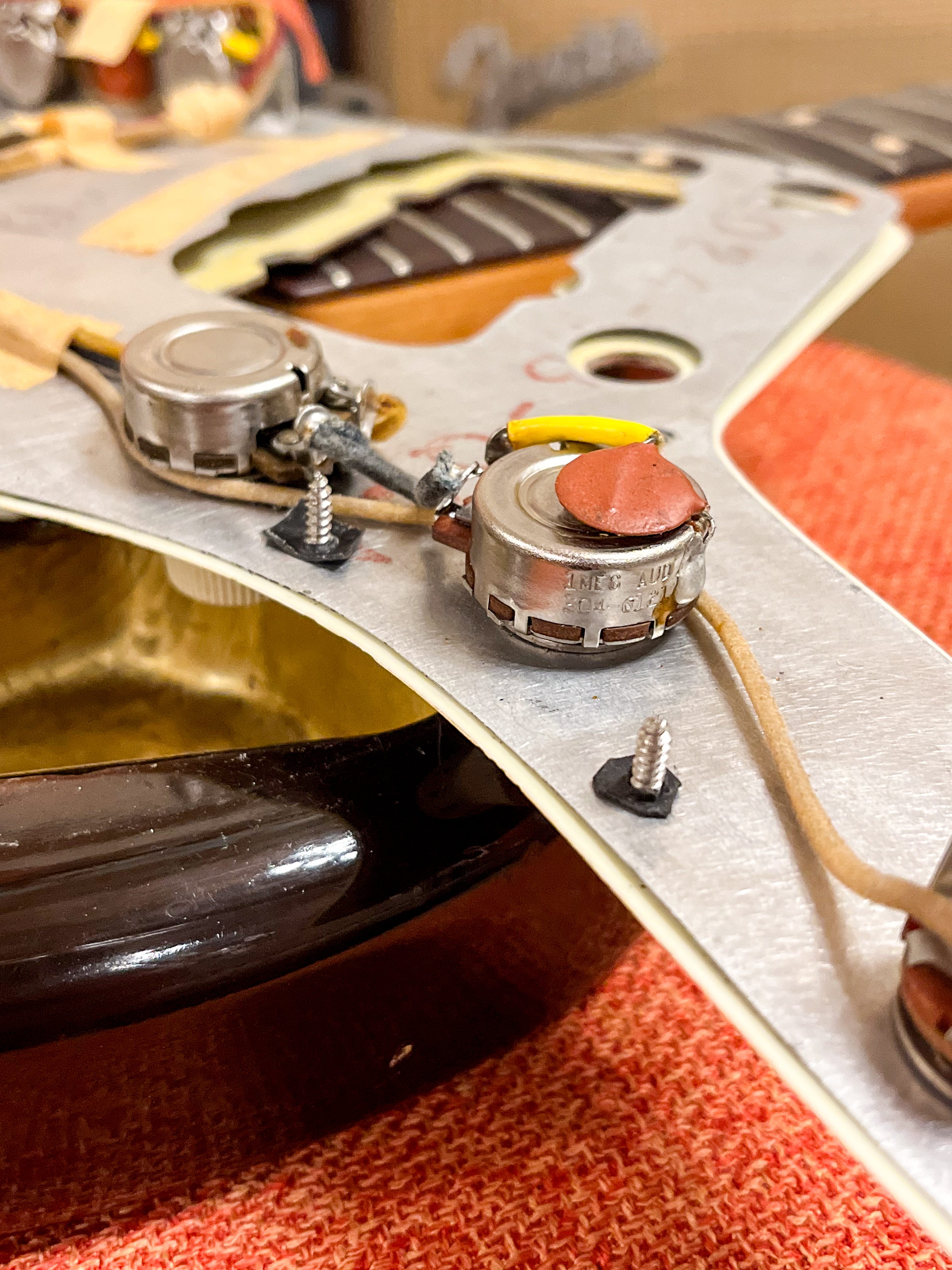
And while we could attribute this ingenuity solely to our man Bill, the practice of mating a Gold Guard-era Jazzmaster body with a later tortoise guard has shown up in one other instance. These pickguard “holes to nowhere” are also present on a one-of-one custom color Violet-finished Jazzmaster, a guitar you may have seen in the collection of our buddy, John Shults, or on the cover of Eleven magazine.
1962 Les Paul SG Standard
And in the Kalamazoo corner, we go from strange to even stranger:
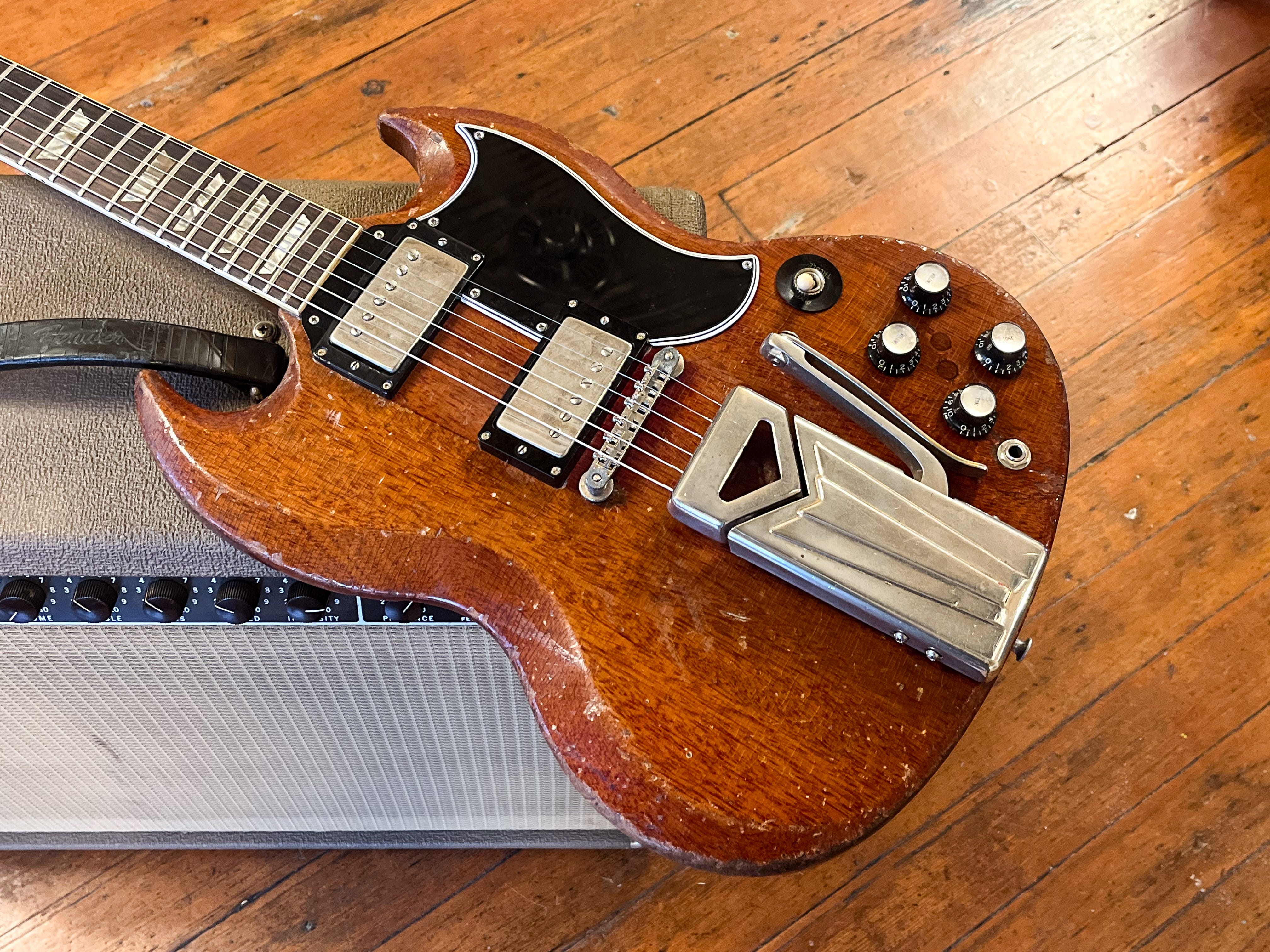
If you just took a passing glance at this SG, you’d be forgiven for thinking it was a run-of-the-mill ‘62 Standard, albeit one with a few modifications and replacements. But if you get close, you’d realize there’s more going on here than meets the eye. And for that, we have a certain Gibson employee to thank.
Unfortunately, I don’t have a name for this particular employee - let’s just call them Gibby. I do have a means of identification, though: Gibby, character that they are, decided the best ID for their instrument would be to stamp their whole social security number into the headstock, right where we would expect a serial to be. But they didn’t stop there: they also wrote it in permanent marker on the inside of the control cavity cover, just in case someone might’ve missed it the first time around. If that wasn’t enough, it’s also written into the inside of the vibrola cover plate (itself a gold-plated example from an SG Custom or ES-355, stripped down to the bare nickel plating). Clearly, we’re looking at someone very thorough.


And that cavity cover itself is strange: it’s stamped out of a piece of aluminum sheet, an exact match to a standard plastic cover. We don’t know why they made this. Maybe they just thought it looked cool, or maybe Ted McCarty was cracking down on non-essential plastic usage.
Second: those Grover Rotomatics? Turns out they’re original to the instrument. There are no alternative mounting points or dowels from the standard set of Klusons, and these particular Pat. Pending tuners are the nickel-plated equivalent of the gears Gibson used on the SG Custom in ‘61.
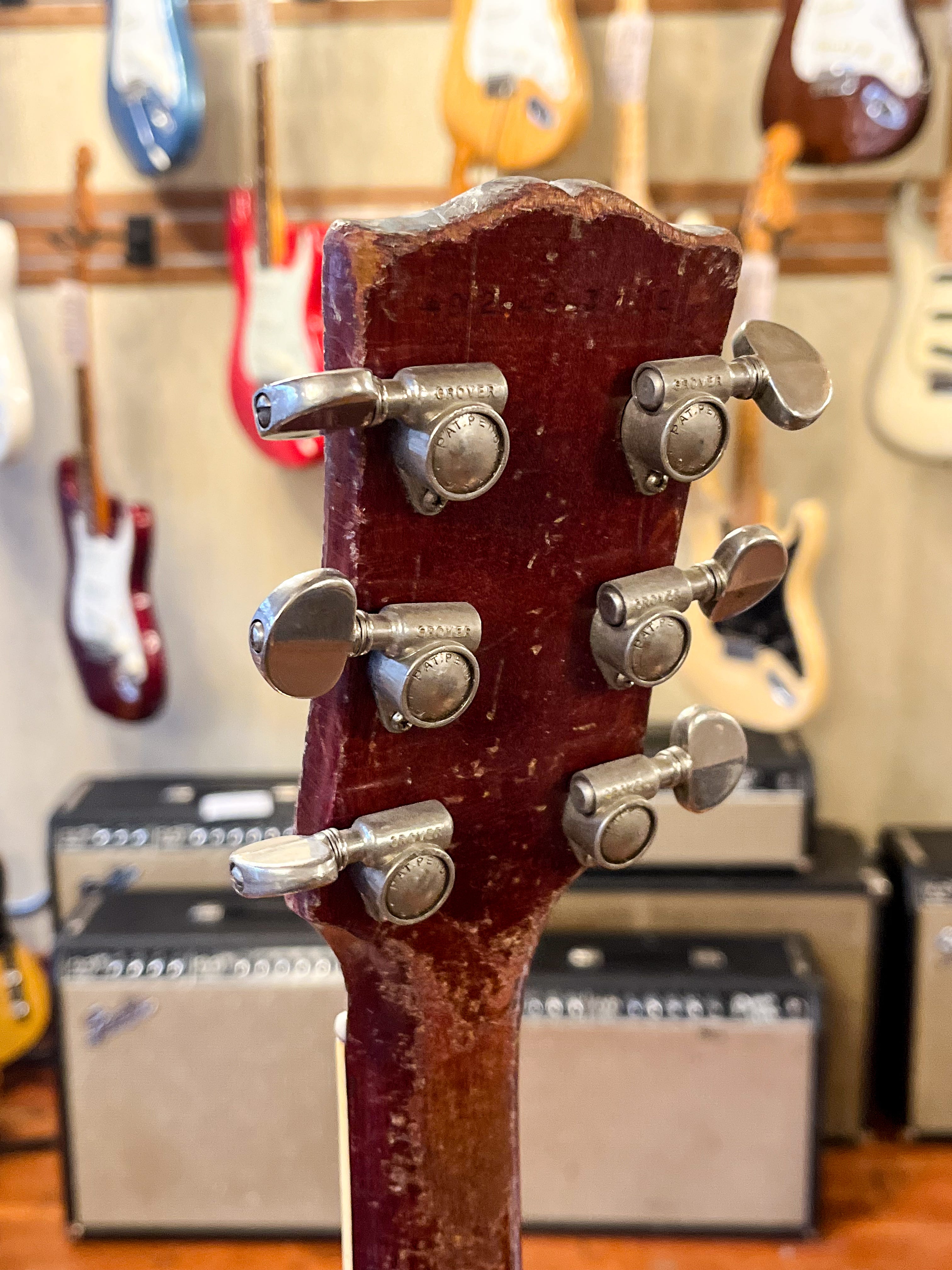
These guitars have plenty in common and both illustrate a function-first approach. One, combining an earlier body with a current production neck/electronics, the other, recognizing the elevated functionality and stability of the Grover gears (especially in the era of the Sideways Vibrola), with a hodgepodge of hardware. Both bear personalized markings of their makers, one more discreet, under the pickguard and in the neck pocket, and one more brazen, omitting a typical serial number for their own SSN.
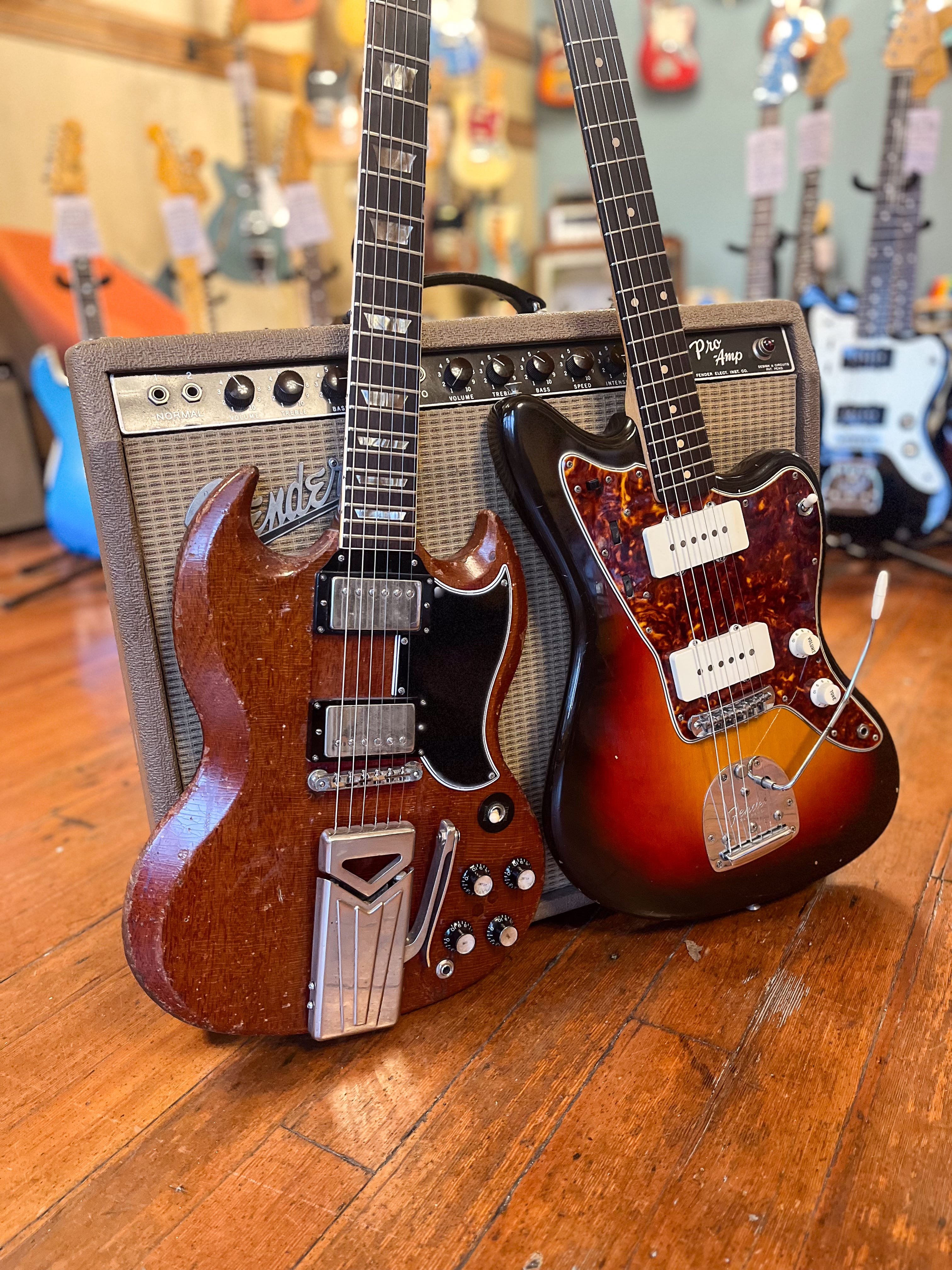
But they’re both rad as hell, and they’re both currently available here at the Guitar Bar.
I worked at a shop in Northern IL, surprisingly we had a decent number of former Gibson employees that lived in our town. We had about a half dozen employee built Gibsons come through the shop, some by the original owner/builder, others by their relatives that inherited the guitars. They were always cool to see.
Cool story!
Stopped buying theses brands anyway as their ratio price/quality is very unbalanced compared to smaller makers !